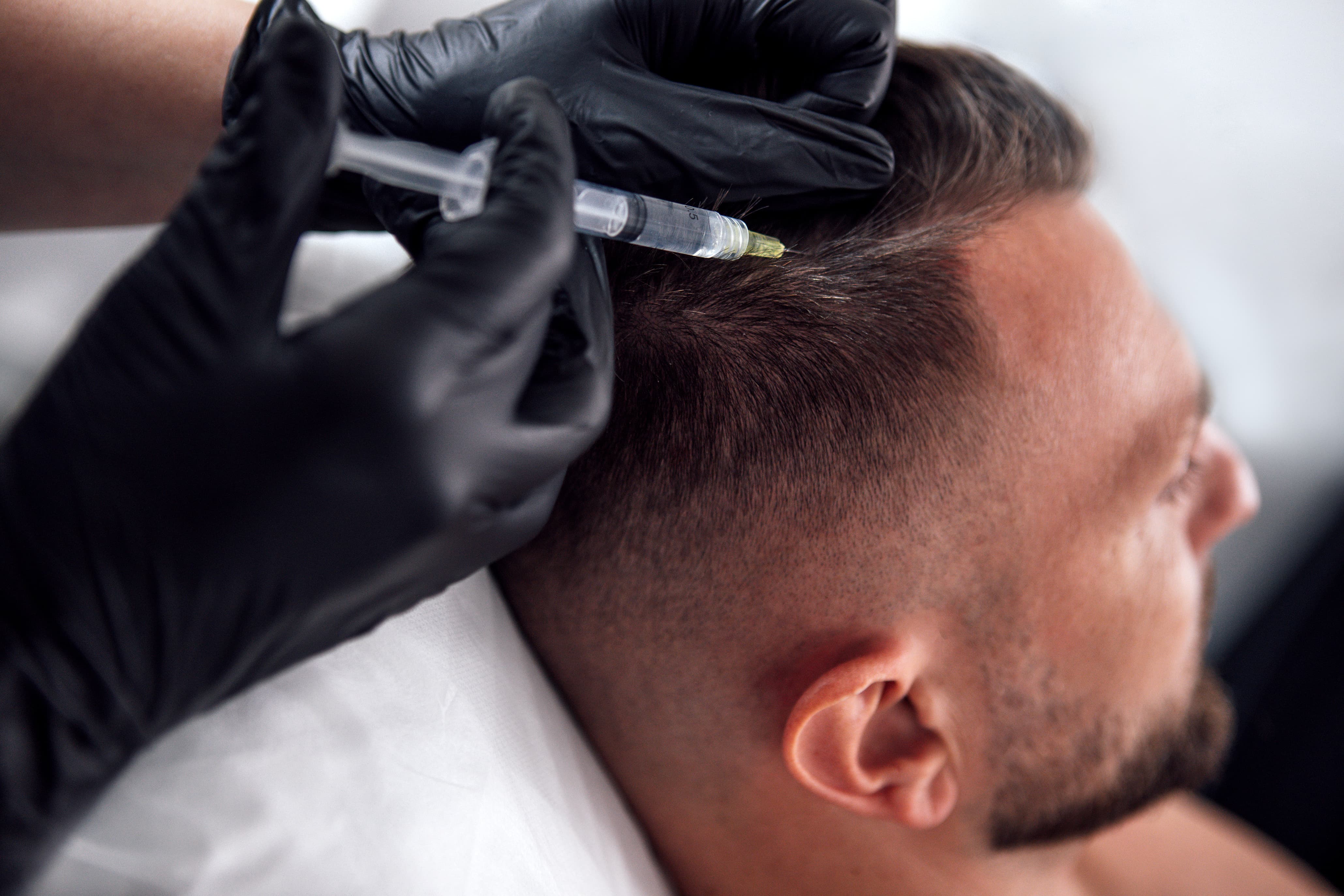
What are PRP injections for hair?
The process is straightforward. A small blood draw is taken, much like routine lab work. That sample goes into a centrifuge which separates the blood and concentrates the platelets into a small volume of plasma. Your provider then injects that concentrate across the thinning areas of the scalp using very fine needles, placed at the depth where follicles sit. Most patients use topical numbing or a vibration device for comfort, and the injection portion takes roughly fifteen to twenty minutes. A typical course is three to four sessions spaced about a month apart, followed by maintenance every three to six months. It is worth knowing that PRP for hair restoration is an off label use performed by a licensed provider, and it is not an FDA approved treatment for hair loss.
Benefits of PRP for hair
- Derived Entirely From You: The injected material comes from your own blood, so there is no foreign substance and no risk of allergic reaction to a donor product.
- Supported by Research on Density: A large 2025 review of randomized trials found PRP increased hair density compared with placebo, though it did not show significant improvement in hair thickness.
- Minimal Downtime: Most patients experience scalp tenderness for a day or two and otherwise return to normal activity immediately.
- Combines Well: PRP is often used alongside topical scalp treatments as part of a fuller plan rather than in isolation.
- A Defined Course: Treatment follows a clear schedule with a set number of sessions rather than an open ended commitment.
What to know before you start
- Off Label Status: PRP is not FDA approved for hair loss. The preparation systems are cleared devices, and scalp injection is an off label application performed by a licensed provider.
- Evidence Has Limits: Research supports improvement in density more strongly than in hair thickness, and study protocols vary considerably across the literature.
- Results Take Time: Hair grows on its own cycle, so meaningful change typically appears around three to six months rather than immediately.
- Maintenance Is Expected: Results are not permanent, and most patients return for maintenance sessions to hold what they have gained.
- Candidacy Varies: PRP tends to perform better with early thinning than with areas where follicles are no longer active.
PRP Injections in Greenwood, IN
We would rather set honest expectations than oversell this. PRP has real support behind it for hair density and it is a reasonable option for many patients with early to moderate thinning, but it is not a cure and it does not work for everyone. Your provider at Evexia Spa and Wellness will assess your scalp, ask about how your thinning has progressed, and tell you plainly whether you are likely to be a good candidate or whether something else would serve you better.